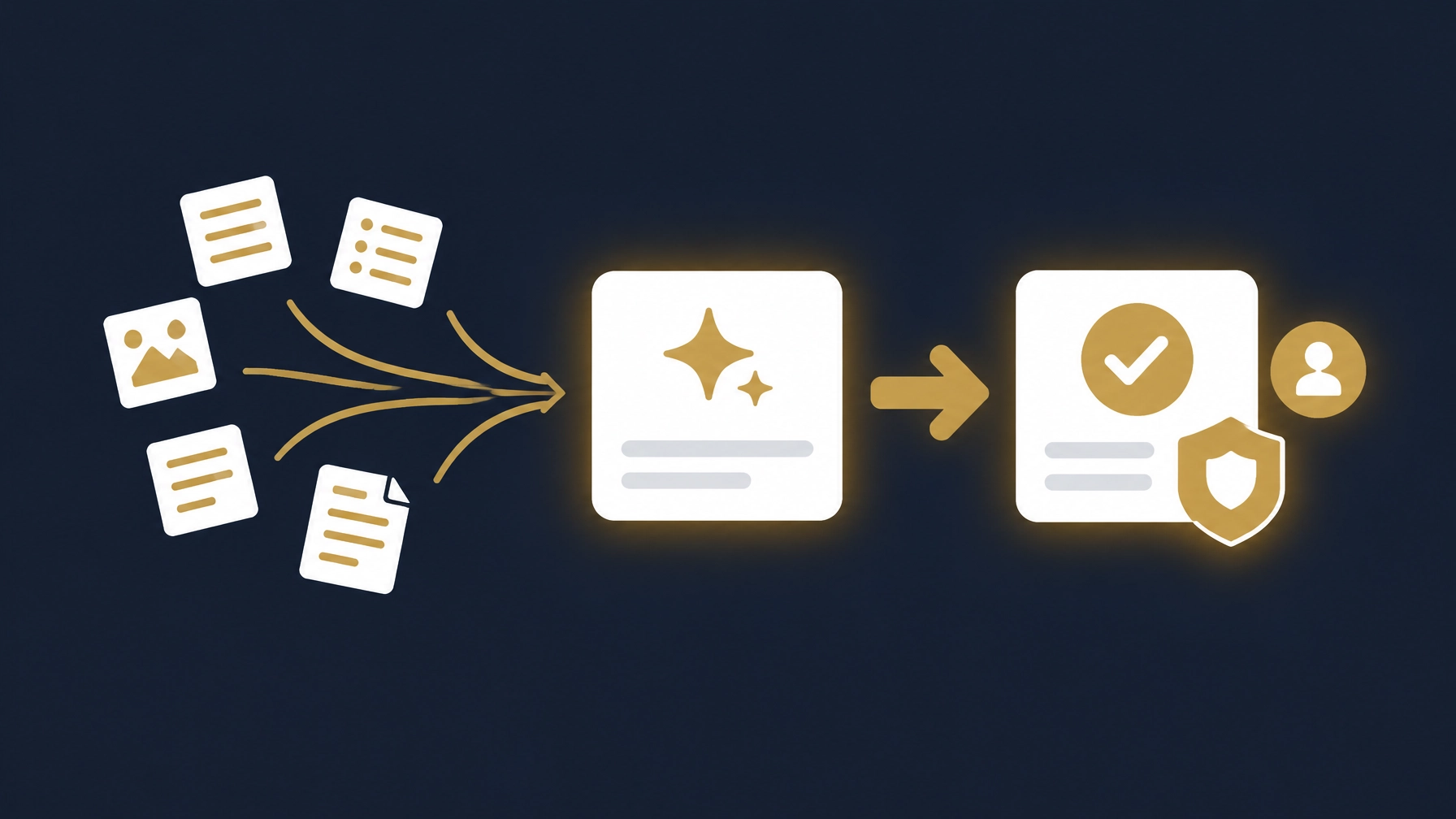
An AI assistant can summarize information, organize it, and prepare a draft for a recurring task. But that does not mean it fits every job, or that every step should run without review. A practical decision starts with the task: Are its instructions clear? Is the required information available? Can the responsible person review the output before it is used?
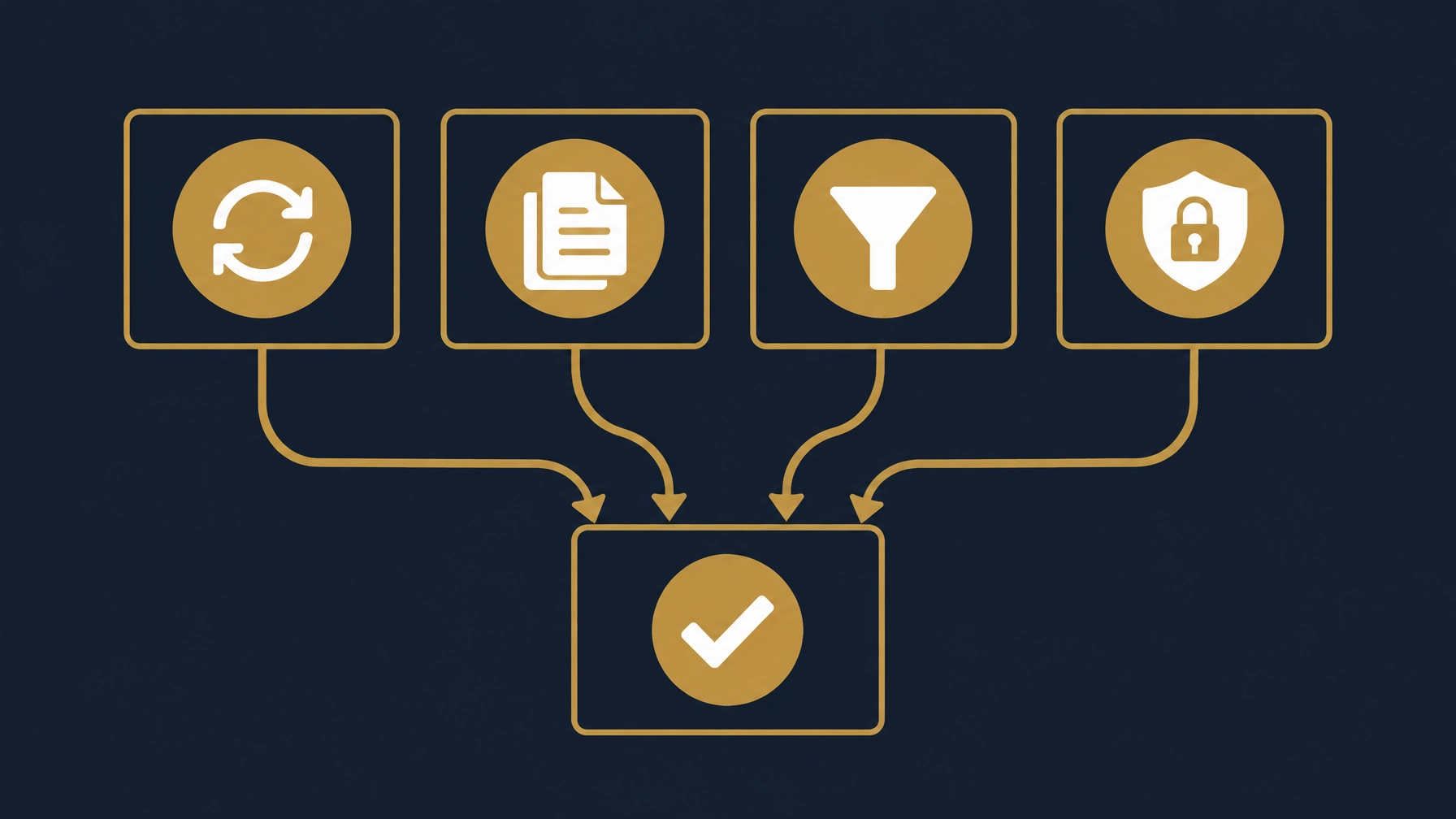
Before choosing a platform, assess the idea with four questions. They can help you decide whether to try a limited assistant setup or first organize the information or process.
Four questions to help you decide
Does the task repeat with the same instructions?
Recurring tasks with stable steps and instructions are often easier to assess than tasks that require a different judgment every time. Examples might include sorting incoming requests according to agreed rules, drafting a summary from existing information, or collecting points from correspondence for a person to review.
Ask whether two people on your team would explain the same steps, and whether you know what an acceptable result looks like. If the task requires a new decision each time, depends on undocumented context, or has many exceptions, start by mapping its steps and identifying cases that need a person. An assistant will not resolve an unclear process by itself.
Is the knowledge the assistant needs written down and available?
An assistant needs a clear reference for what it may use: instructions, steps, approved answers, or examples of the desired draft. If knowledge is scattered across private chats or held by one employee, the assistant may produce incomplete answers or responses that differ from the team’s agreed approach.
Identify the source of information, who maintains it, and what to do when information conflicts or is missing. Do not assume that collecting old files is enough; identify which version is current and what content should not be used. If the company’s information is not ready, organizing it may be a better first step than adding an assistant.
Is a draft before sending enough, or must the system send on its own?
For many tasks, a well-organized draft is useful even if the assistant never sends it. A team member can correct details, check the facts and tone, confirm the intended recipient, and approve it.
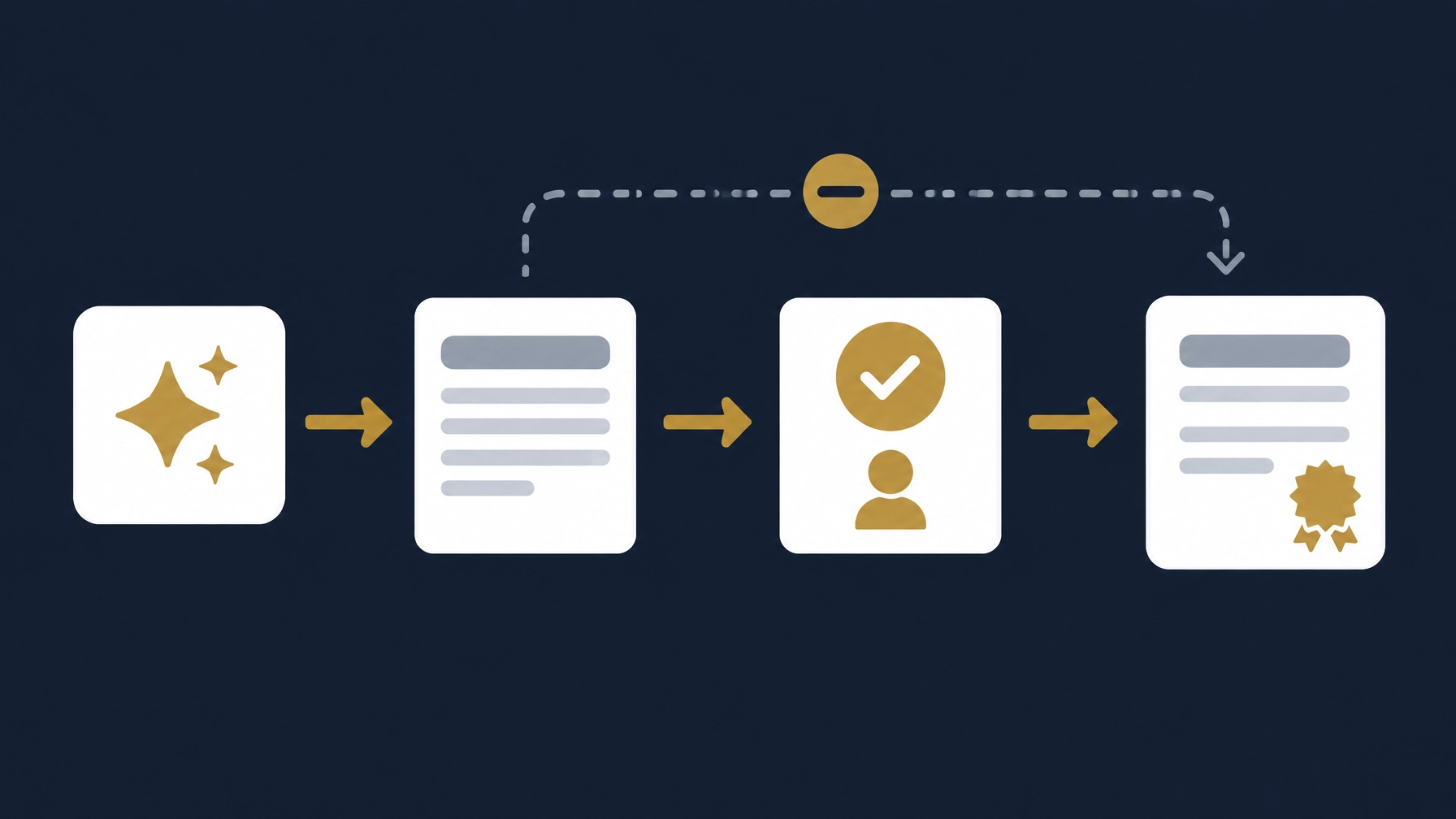
Make human approval explicit before sending an external message, publishing content, or changing a system record. In the disciplined path proposed here, require explicit human approval before sending or publishing, along with an available, permitted integration to carry out the task. Asking the assistant to send something does not prove the necessary connection or permission exists. Your company retains the final decision.
Can the person reviewing the assistant’s work evaluate it?
Human review is more than clicking an approval button. The reviewer needs to understand the task and have clear criteria: Is the information correct? Did the assistant use the appropriate reference? Did it follow instructions? Did it avoid guessing when it did not know?
If the reviewer cannot distinguish an acceptable result from an incorrect one, it will be difficult to catch mistakes before using the output. Write simple criteria, define what must be stopped and handed to a person with the right expertise, and identify who may approve the draft. Recording reasons for edits or rejections can help improve instructions and tests.
Data, tools, and risks: what should be connected or restricted?
Start with the smallest scope the task needs. Identify what information the assistant must read, which tools it needs to use, and what results it may prepare. Do not connect every company file or grant broader permissions simply because a platform allows it.
Separate reading and drafting from execution. Decide in advance which actions must pause for review, such as sending an external message, changing a record, or approving a step. Review the vendor’s data policy and the limits of your intended use before entering business information. This is part of choosing a tool, not a substitute for deciding what the assistant actually needs.
When are simple tools or ordinary chat enough?
If a task is temporary or manual, needs no company-specific context, and does not require a connection to a work tool, an ordinary chat with your own review may be enough. If the main problem is unclear instructions or processes, writing down the steps may be simpler than setting up an assistant.
If a task is recurring, has a known reviewer, uses available information, and needs to work with business tools or a defined workflow, a platform or customized setup may be useful. Examples of names to research include Microsoft Copilot Studio, Intercom Fin, ChatGPT from OpenAI, Google Cloud Agent Builder, and AWS Bedrock Agents. These are examples, not a ranking or recommendation. Product names and capabilities change, and some vendor documentation describes platform transitions, so check the current official information before choosing.
At Basetaa, we start with the task and the tools a client already uses, then build, configure, customize, and connect a solution around the client’s needs. We use existing frameworks and platforms, such as Hermes when suitable; we do not claim to own third-party tools or sell a ready-made, off-the-shelf AI product. Learn about Basetaa’s AI assistants and agents service.
Practical tests before adoption
Test the task with real examples before expanding its use, and have someone who understands the work review the draft:
- A real task: Try a representative request from daily work and compare the result with the agreed method.
- An edge case: Try missing information, conflicting instructions, or an unusual request. Does the assistant ask for clarification or produce an unsupported answer?
- A permission-bypass attempt: Test a request that tries to make the assistant act outside its permitted scope. Confirm that it stops or asks for human review instead of executing.
- An interruption or outage: Test what happens if the assistant stops or the connection drops while it is drafting or using a connected tool. Do not assume it works offline or saves progress as needed; prepare a fallback process and review drafts after service resumes.
- A connection to an existing tool: Check that information reaches the intended place and that the assistant cannot perform additional actions that have not been approved.
Evaluate the draft and its limitations before approving any action. If the problem comes from unclear instructions or a missing reference, address the cause and test again. If the task is difficult to assess or there is no fallback when the assistant stops, do not expand its use until the process is clearer.
How Basetaa helps
At Basetaa, we start with the way work actually happens: what task repeats, what information is available, which tool needs a connection, and where a responsible person should review the assistant’s work. We then configure and customize the assistant, agent, and automation around the client’s workflow, using existing tools and frameworks where suitable.
Basetaa does not own a ready-made AI product or claim ownership of third-party platforms. Basetaa does not set up sending or publishing without the client's explicit approval and a defined human-approval point; final approval remains with the client. If your challenge is closer to reporting, see our guide to preparing a monthly management report from Excel files or our guide to choosing an HR system for a small business.
Frequently asked questions
What is the difference between an AI assistant and a chatbot?
The label alone is not enough to tell. Some tools answer questions; some configurations help with defined tasks, steps, or tools. What matters is the task’s scope, available information, permissions, and human-review point—not the marketing label.
Does a small business need an AI assistant?
Not necessarily. Start by identifying a recurring, understandable task, then check whether the information and evaluation criteria are clear and whether someone can review the result. If the task is vague, rare, or difficult to evaluate, documenting the process or using a simple tool may be a better first step.
What is a useful practical test before adopting an assistant?
Test a real task, an incomplete or unusual case, an attempt to exceed permissions, a connection interruption, and the integration you need. Have a qualified person review the draft and confirm that it is accurate and within scope before approving it.
Does the assistant need to send messages on its own, or is a draft enough?
A draft reviewed by a responsible person may be a good starting point. In the disciplined path proposed here, require explicit human approval before any automatic sending or publishing, along with an available, permitted integration. The final decision remains with the client.
Sources Checked
Pages checked on 11 November 2026. The primary sources first document the human-approval and evaluation guidance this article's method builds on; the platform pages after them are descriptive references to products, not a ranking or recommendation:
- Evaluation triage readiness in Microsoft Copilot Studio — documents an approach for assessing task readiness before setup.
- Advanced approvals in Microsoft Copilot Studio — documents setting human-approval points within agent workflows.
- Human review and guardrails in OpenAI Agents SDK — documents human-review mechanisms and pausing actions for approval.
- Human-in-the-loop steps in Google Workflow Builder — documents human-in-the-loop steps inside workflows.
- User confirmation before actions in AWS Bedrock — documents asking the user for confirmation before certain actions.
- Human-in-the-loop approvals for Fin procedures — documents human-approval points before executing procedures.
Platform examples
If these decision questions sound familiar, identify a task for an AI assistant through Basetaa’s AI assistants and agents page.